Overshooting that base-to-final turn can be a problem. Trying to get back on course safely can be dangerous.
Showing posts with label Safety. Show all posts
Showing posts with label Safety. Show all posts
Thursday, December 18, 2014
Takeoffs and Landings: Base to Final Turn
Overshooting that base-to-final turn can be a problem. Trying to get back on course safely can be dangerous.


Wednesday, December 17, 2014
Accident Case Study: Delayed Reaction
On December 20, 2011, a TBM-700 crashed onto a freeway near Morristown, New Jersey. In this case study, we piece together the events that led to the tragedy, and discuss what we as pilots can learn from them.
Friday, May 23, 2014
Saturday, May 10, 2014
Does Garmin have a PC simulator for my aviation GPS?
The answer is a resounding...... probably. Garmin has been known for their terrific customer support over the years so I would be surprised if they didn't offer some sort of free training right on their web site. Below you will find an extract taken from their web site that shows a list of supported units with links to their training products. This is a little dated but should remain helpful for years to come.
If you don't find what you are looking for, contact me directly as I have a library of material and can offer some hands on training in your airplane if you wish.
Have fun and fly safe!
Does Garmin have a PC simulator for my aviation GPS unit?
Garmin currently has PC simulators for the following aviation units:
- GNS 400/W
- GNS 420/W
- GNS 430/W
- GNS 500/W
- GNS 530/W
- GNS 480
- GTN 750
- GTN 725
- GTN 650
- GTN 635
- GTN 625
- G600 / G500
- G1000
All simulators, except the G1000 simulators, are available to download free of charge from our website at http://www8.garmin.com/include/SimulatorPopup.html for the GNS 400/500 series, https://buy.garmin.com/shop/store/downloadsUpdates.jsp?product=010-0G600-00&cID=195&pID=6427 for the G500/G600, or https://buy.garmin.com/shop/store/downloadsDetails.jsp?id=5379&product=010-00820-50&cID=194&pID=67886 for the GTN 600/700 series.
The DVD-ROM for the G1000 simulator can be purchased at https://buy.garmin.com/shop/shop.do?cID=153&pID=6420 under PC Trainers on the Accessories tab.
What is Air Traffic Control and What Do They Do For You?
Monday, March 03, 2014
Cessna Twin Icing AD
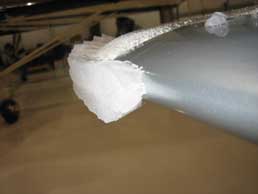
It would appear that the FAA feels this to be necessary because too many pilots were ignoring a mandatory service bulletin that was issued by Cessna in 1997.
It was discovered that even a little ice on almost 7,000 of the twins could seriously affect the slow-speed handling.
This AD becomes effective April 7, 2014 and required the installation of a placard requiring an extra 15 knots on approach if there is an inadvertent encounter with icing.
This is the current list of the airplanes affected by this AD. (Cessna Twin)
Thursday, February 20, 2014
Runway Safety: Providence, RI. A Near Catastrophe
During a foggy night a flight crew gets confused and almost causes an accident of massive proportions. Was there a magic piece of technology that prevented this near accident from happening? Was it a genius of a regulation that eliminated runway incursions and their potentially disastrous consequences?
No, simply paying attention to what was happening on the radio and a little situational awareness caused the accident chain to be broken.
Friday, January 31, 2014
Risk management while airborne
CAREing for your flight
We know how to check out the airplane that we will be flying to see if it is airworthy and we have some requirements as pilots that help make our Go / No Go decision but how do we monitor the progress and safety of our flight once in the air? We do this by using the acronym C.A.R.E.
C = Consequences. A flight, regardless of the distance, is in a constant state of change. To be safe, pilots must decide what impact these changes are having on the safety of the flight. Let us discuss some of the variables and their possible impact on the flight.
Has the airplane been operating normally? Have you noticed if the engine is running a little rough or is the oil temperature running a little warmer than normal? These are things that can creep up on you unexpectedly that could change the outcome of the flight. Are the winds aloft doing what you expected? If your ground speed is higher than you expected that is OK but lower then planned could cause issues with fuel. Also, as the airplane burns fuel you may see a change in the center of gravity. During a long flight it is possible in some airplanes to shift the center of gravity out of the acceptable range just by burning too much fuel for the given loading.
A = Alternatives. During your flight planning you became familiar with the location and types of airports along your route, right? You are tracking your progress along the ground and adjusting your back up plan based on location and situation, aren't you? One of the easiest ways to remain safe and relatively stress free is to have alternatives. It doesn't need to be an elaborate plan or be all consuming during your flight but understanding what your options are at any given point will help the decision making process when the time comes. What do you do if the weather turns bad? Where can I stop for fuel if the need arises? What local airports are suitable for an alternate in case of an emergency? These are all things that should be on your mind during the entire flight.
R = Reality. When things do start to change for the worse, you need to not only recognize that fact but you need to accept it. Hmmm, is it taking longer to reach my checkpoints? Maybe I should land for more fuel. Am I getting tired? Maybe I should land and take a break, grab some food or go for a walk. The fact is, a large number of experienced pilots find themselves is bad spots because they ignored the worsening weather, fuel gauge or their own body.
E = External Pressures. Get there itis will kill you, period. The romantic getaway that you promised to your spouse, business meeting, wedding or anything else you can think of is not as important as getting to your destination alive. Make your personal minimum list, share it with others while explaining what each item means and then stick to it. If the people that rely on you understand why you make the decisions that you do, it should help take the pressure off when things don't go as planned.
Flying is supposed to be fun as well as useful. Don't let complacency, outside pressures or a lack of attention turn a wonderful experience in to a tragic event.
Thursday, January 30, 2014
Are you ready for this flight?
Are You Ready To Fly?
All pilots have been exposed to the I.M.S.A.F.E. acronym and its use as a sort of pre-flight check for the pilot. Let's break it down and look at each of the letters individually.I = Illnesses. Do you have a cold or allergies? If you do, you probably should not be flying.
M = Medications. Are you taking medications of any type either prescription or non-prescription? If you are, make sure that your AME and the FAA allow you to fly with these medications in your system. In flight is the worst possible place to find out your new sinus medication makes you drowsy.
S = Stress. Are you under any kind of stress? Stress by itself is not bad but too much stress will cause distraction and a loss of performance. Not what you need when flying an approach in the soup.
A = Alcohol. How long has it been since you had your last drink? Remember the eight-hour bottle-to-throttle rule. In addition to that don't forget the 0.04% blood alcohol content. Even though you might meet the legal requirements, if you are hungover you won't be operating at maximum.
F = Fatigue. A lack of sleep can not only cause a loss of focus, lose enough sleep and the effects are similar to a night out drinking.
E = Emotions/Eating. Argue with your spouse? Skip breakfast or work through lunch? The combination of being bring dehydrated and having low blood-sugar will cause your performance to suffer.
PAVE Your Way
The above checklist covers the pilot, now let's examine the flight in its entirety using the acronym P.A.V.E..P = Pilot. Are you up to the planned flight? You have used the I.M.S.A.F.E. checklist above and it show that you are fit for flight. Right? How much time do you have in the aircraft or similar aircraft to the one you are going to be flying? Are you current and proficient? How are your IFR skills? Are your personal skills and training up to making this trip?
A = Aircraft. Does the aircraft meet or exceed the mission requirements? Can it handle the people, fuel, and "stuff" that you are asking it to? Have you calculated the aircraft performance, weight and balance? Does all the required equipment and instrumentation work?
V = enVironment, meaning environment. What is the weather forecast to be? How does the actual weather compare to the forecast? Is it getting better or worse ? Where is the freezing level? Have you checked all en route and destination NOTAMs and TFRs? Remember to wear appropriate clothing for the type of terrain you will be flying over and not the room that you are planning your flight in. Do you have enough survival gear?
E = External Pressures. Why are you making this trip? Does a non pilot passenger not understand your hesitation in launching or why you are considering a diversion? Do you have a meeting or special event such as a graduation or wedding that you are in danger of missing? External pressures can place a huge demand on us to make the trip. The key here is to set your personal minimums and stick to them no matter what. You might say doing that is easier said than done but it really can be that easy. I always have a back up plane to cover the important things. Can I drive, take a train, fly commercially? Pick one and parallel plan so you know that you can make it. Don't forget to plan a little extra time to offer greater flexibility.
Remember, the only life or death situation is the one you may face in the air if you push your luck.
You can never have too much gas. There is no reason to burn your reserves during a normal flight. My personal minimum is one hour fuel in the tanks when I land. If the winds aloft are not in your favor or your routing changes, don't compromise safety. Land and fuel up, be a little late if need be but get there alive.
General aviation has earned a reputation that it doesn't deserve. Flying little planes is not inherently unsafe, it is generally the pilot that causes the plane to stop flying. Sure, mechanical failure can happen to the plane with the best maintenance money can buy or the weather can turn bad at a moments notice but statistics show that the most common error exists between the yoke and the chair.
Subscribe to:
Posts (Atom)


